
Golden Week Recap
and a shelf of memories

Another beginning and an ending. You turn to the 30th page of April and it seems you and the entire country are celebrating the epilogue of what has felt like one of the worst months of your life (though this is something you remember you have said before and have overcome). It is within your nature to survive past the worst. But of course this is not a celebration of your resilience, it is, in fact, the beginning of Golden Week in Japan—a week’s worth of consecutive holidays that will give you some space to rebuild. So one morning when I woke up without having to go to work, I looked to this quote by F. Scott Fitzgerald and let the last of it pass,
Well, let it pass, he thought; April is over, April is over. There are all kinds of love in the world, but never the same love twice.
- F. Scott Fitzgerald
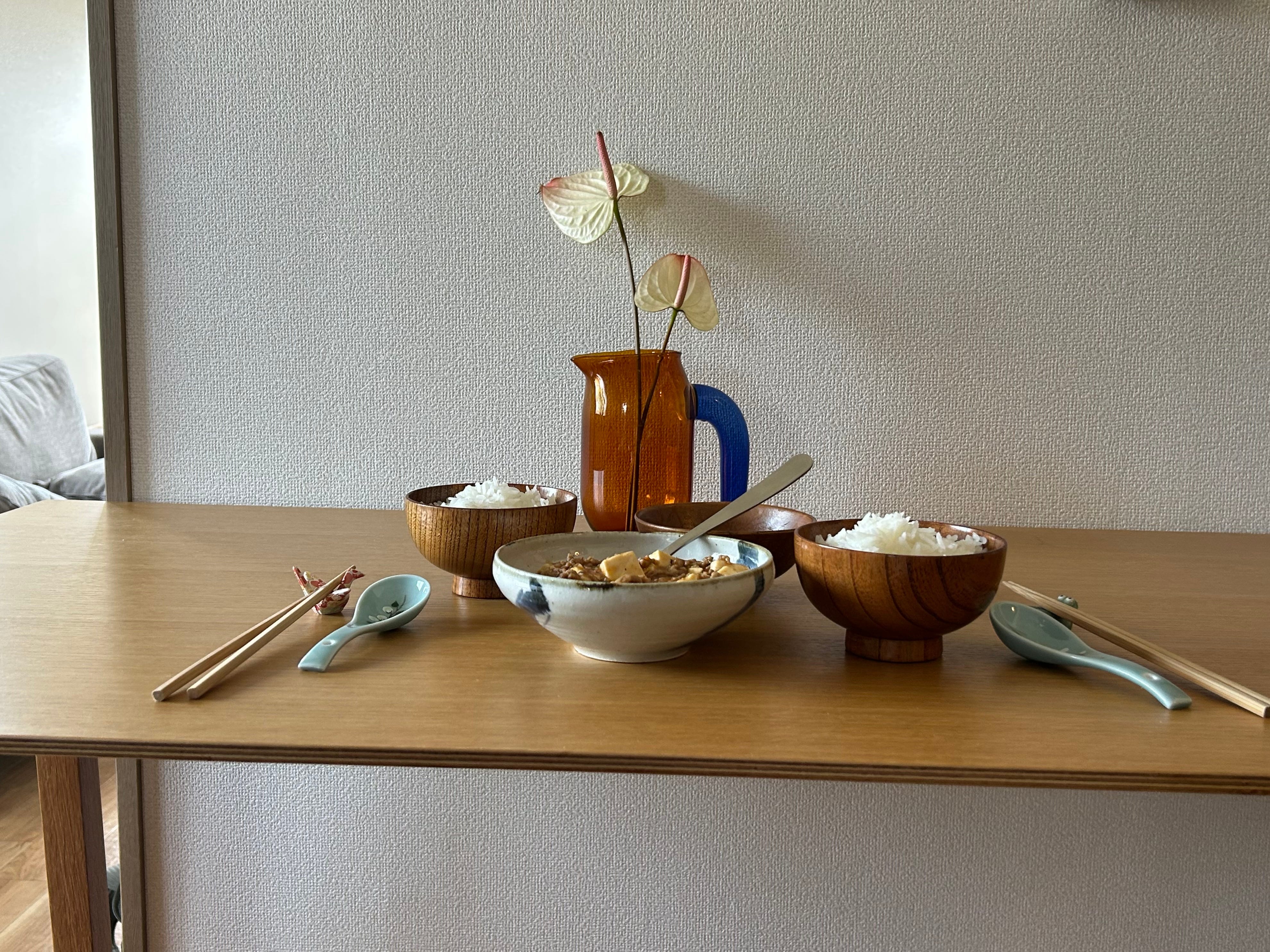
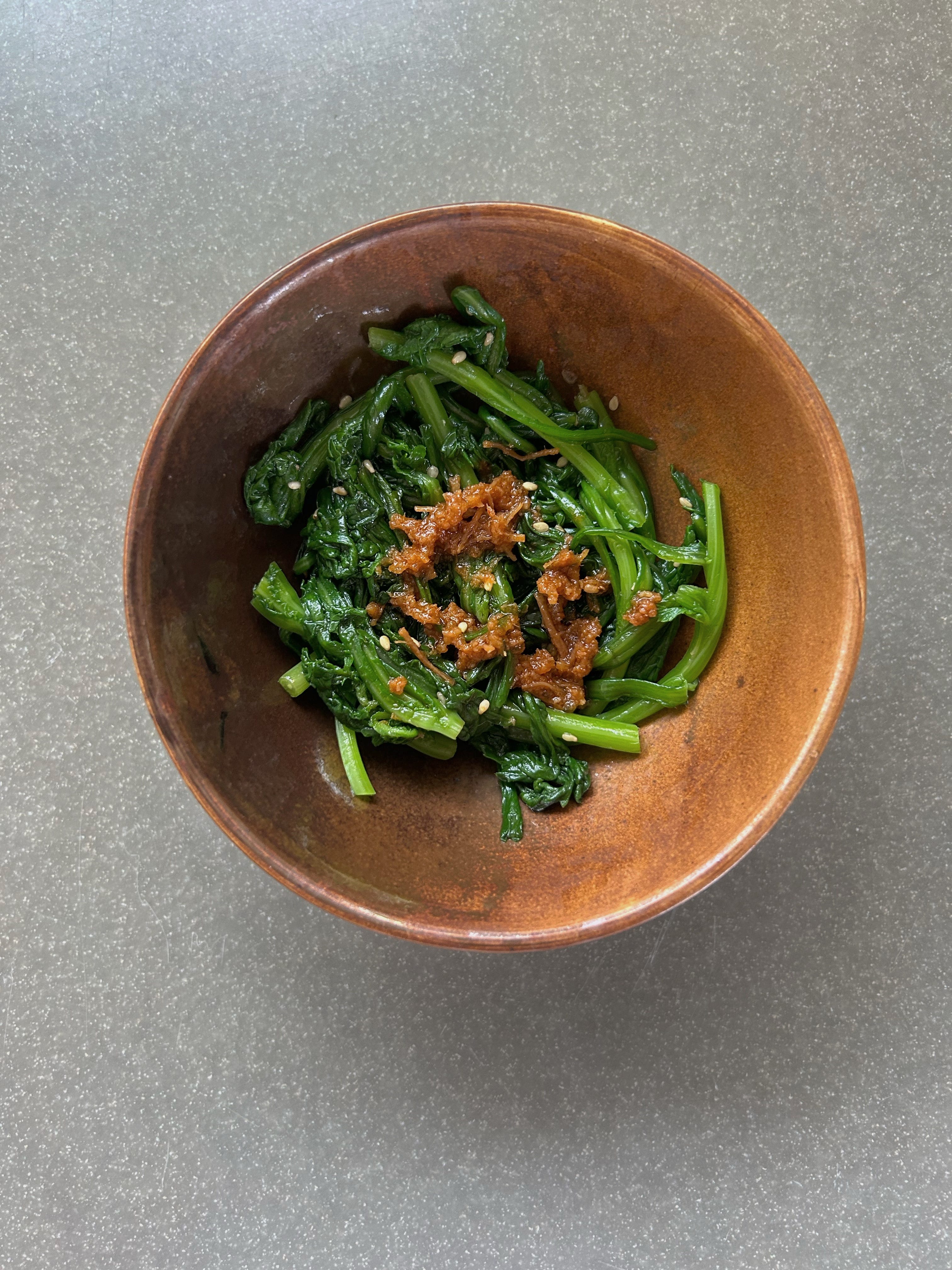
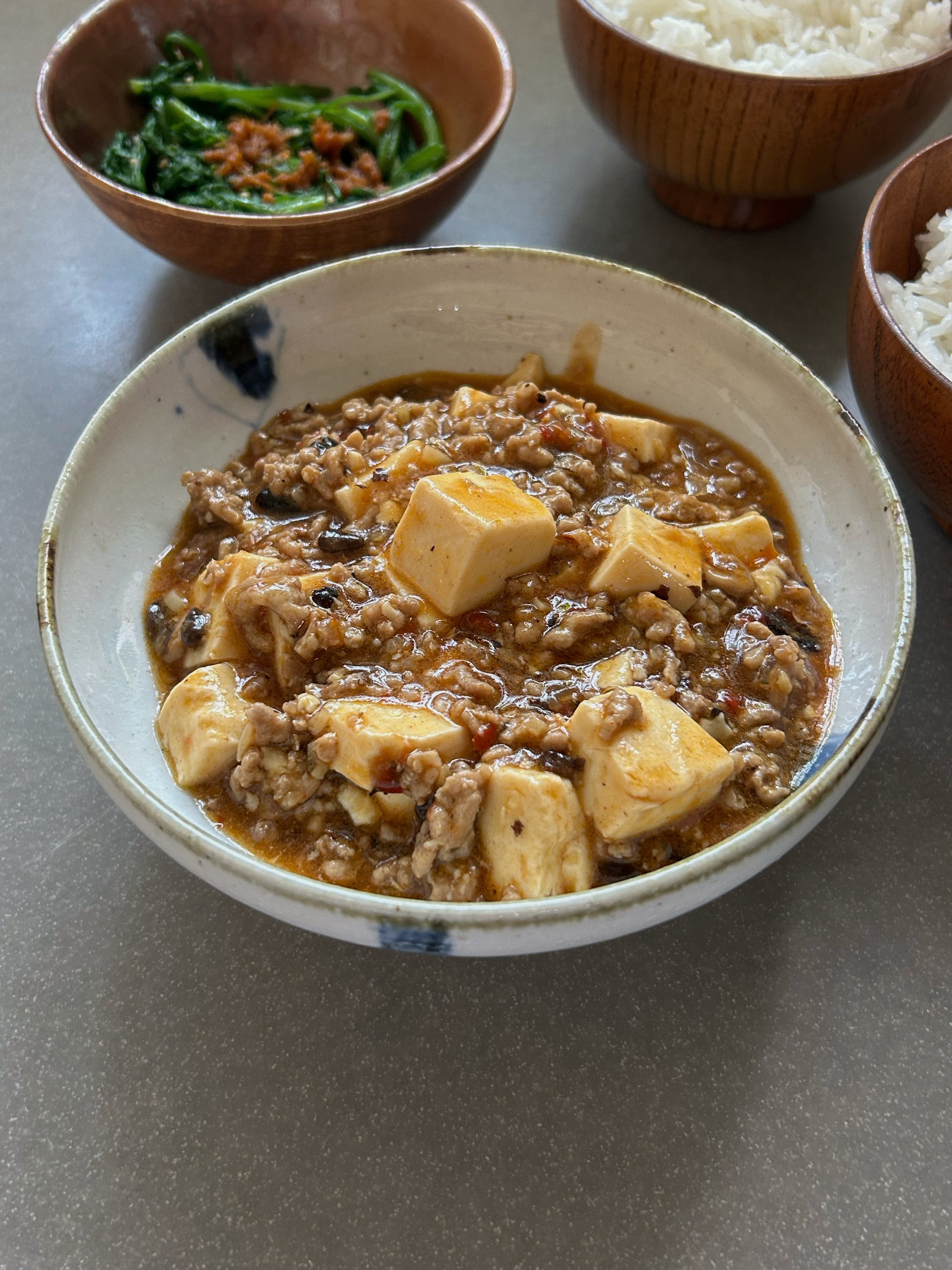
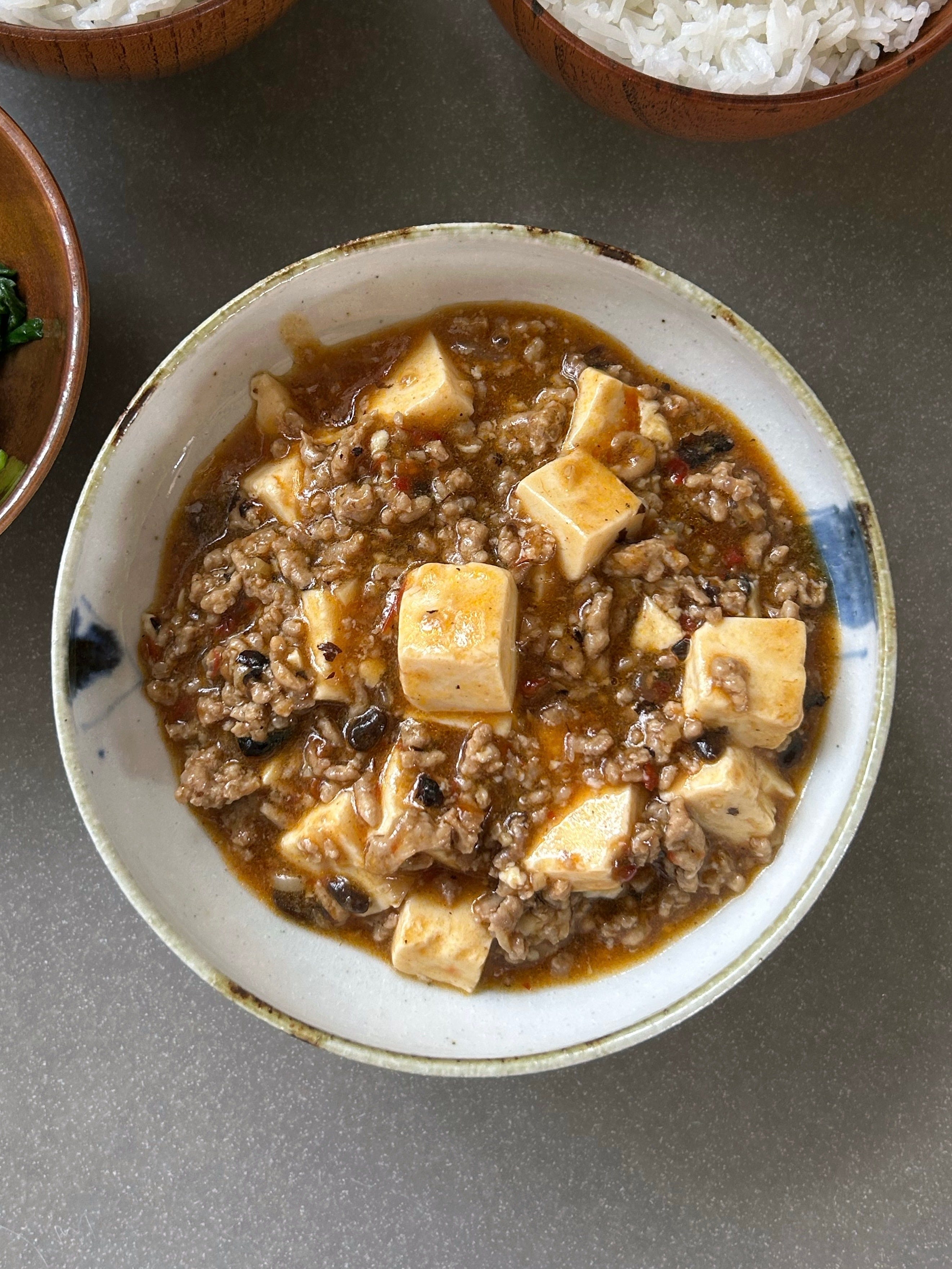
Mia came over and we took some photos for her latest project Yohaku Collective. I made mapo tofu and I told her while squeezing water from wrinkled chrysanthemum leaves, that I’ve never had photos taken of me as I’ve cooked. This felt like something special. The word yohaku in Japanese, 余白, refers to the emptiness that holds space for meaning in the margins. I think as I’ve gotten older and since having moved to Japan, I’ve embraced the pauses in my life where the heaviness feathers out into peace and how moments of seemingly nothingness gesture us towards meaning.
M: Have you had a moment while cooking where something small felt meaningful?
Honouring the relationship between food and memory has led to many moments where even the smallest things while cooking feel meaningful. It can be as simple as cutting tofu in the same way that I’ve always watched my mom cut it and how that memory returns with the movement of my knife.
M: What first drew you to cooking?
Some of my earliest and favourite memories have always involved sitting at a table with some really good food in the middle of it. Growing up with food as such an integral part of my family and identity, and seeing both of my parents cook, cooking became second nature. I’m drawn to it because it’s how I show love and it’s a way for me to create moments that I know I’ll always cherish. I also just really love to eat and this is a creative outlet that can lead to a delicious meal.
Do you think yohaku is something you notice or something you create?
I think it’s something we create subconsciously, but noticing it is what gives it meaning.
What does “yohaku” mean to you?
Yohaku for me is when the constraints of time, pressure, and expectation are blurred and I allow myself to truly become absorbed in the present. Lately, it feels like there is a currency attached to everything we do, a valuation of our hobbies that takes precedence over doing something for the sake of loving it without return. I let my thoughts spill out in sentences that people may never read, I take months to finish a book and love it all the same, and even if I never posted a photo of my food again, I would still cook as I always have. So what all of this means to me then is that I can find genuine happiness in the prolonged pauses where I simply just let it all be.
What makes a simple moment feel meaningful to you?
Every simple moment is a thread of our experience and what’s more meaningful than that?
If you’ve read this far, here’s quick recipe for my mapo tofu, just omit the eggplant.
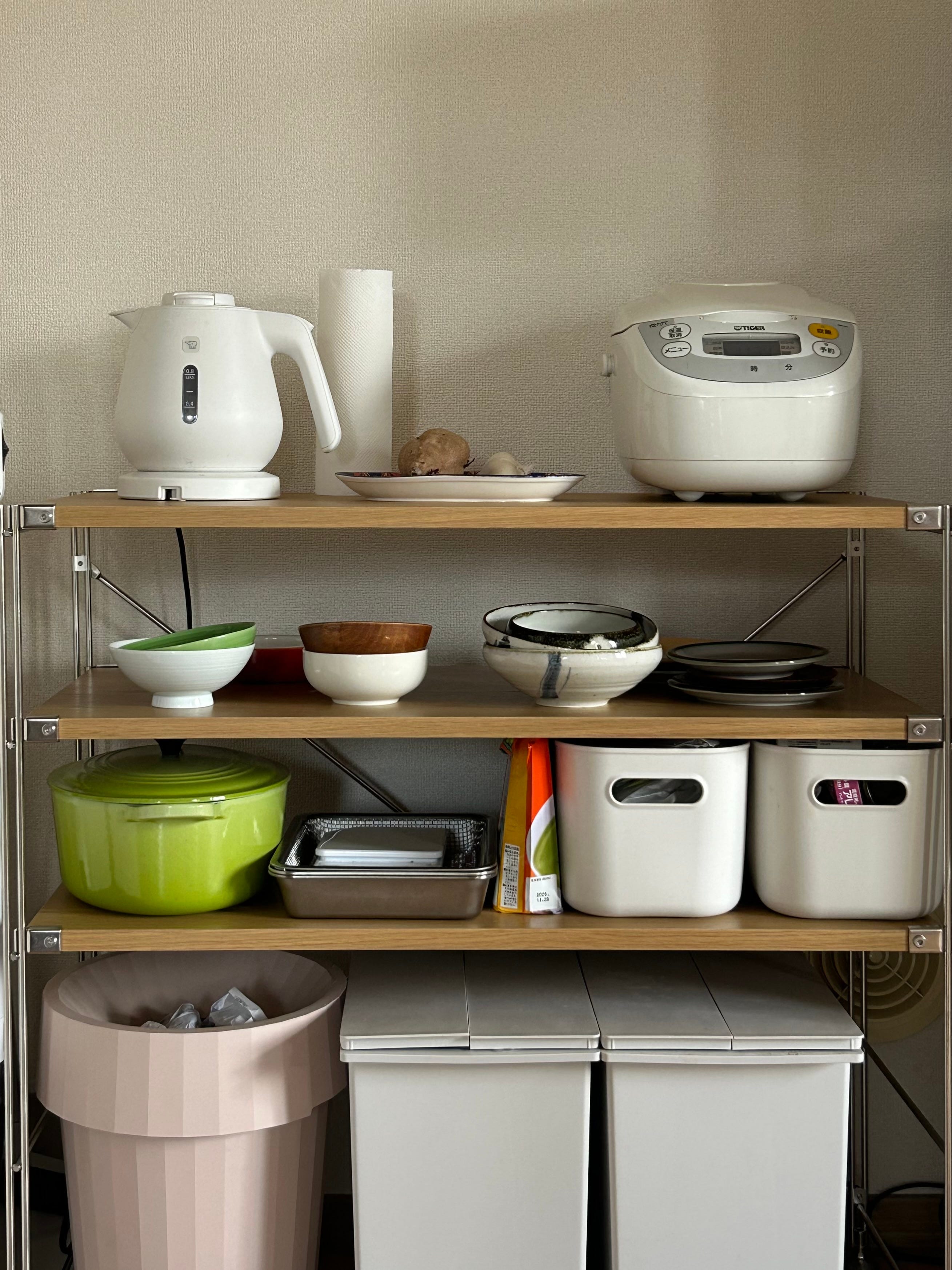
I finally bought a shelf for the kitchen after months of pots, pans and my rice cooker stacked across the floor like an ornamental cornucopia of kitchenware. In August I will have lived in Tokyo for two years and I’ve stopped fighting myself when it comes to spending money on furniture. Is there a specific word for the trauma of being a 20 year old who moved in with her boyfriend after having moved home to take a break from him, all the while still being in love with her first love, only to then spend $3000 on a couch with her savings from her restaurant job because in her naivety, thought that this couch would be an investment into a relationship that she’d never leave? Whatever that trauma is, I have it.
Six years ago, that couch translated into a promise of everything we wanted ourselves to believe: we were serious, lasting adults, building the beginning of our real life together. My ex-boyfriend and I had spent an egregious amount of money making everything around us look immaculately curated—an Artek stool, a Noguchi lamp, vintage chairs from Inform. But all of this was still decorated with my profound unhappiness. During fights, despite screaming I couldn’t take it anymore, I’d look at our apartment and all of its beautiful things, and still stay. We lived in that second apartment for two years, until I no longer stayed. No $3000 couch or $1500 custom Douglas fir shelf could keep the shape of us intact. When it came to us breaking up—me moving out and him keeping the apartment—I took nearly all the furniture that had once narrated this imagined stability, including my couch. The pain after all wasn’t so much that I had spent money, it was that I believed in something that wasn’t true and had built an entire life around that belief.
Eventually, before moving to Tokyo, I sold everything except my couch. I kept it in my best friend’s apartment, now with cat scratches on its arms and a water stain in the centre of the cushion. It was always my couch anyway.
Nearly all my furniture during my first year in Tokyo was bought off of Amazon. None of it implied a future. Nothing rooted, nothing to be lost in the same way again, and certainly no attachment could be formed to my cheap green cushioned folding chair ordered using next-day delivery.
But then R and I fell in love. After a year, I gave up the safety of everything temporary and we moved in together. I didn’t yet completely trust permanence, but I realized I no longer needed it to deserve happiness.
Moving, however, is never easy. You fall in love, you move in together, and then you learn that you are at the mercy of everything that has come before. You buy a new grey couch and become scared that you will have to sell it again. Then, inevitably, you fight and the fear is no longer in your head—it’s real and you’re sitting on it.
But for some reason, during this period of fighting, you open your computer and finally buy that kitchen shelf you’ve been talking about for months. The sharp edges of the apartment soften and you say to yourself: nothing has to be lost in the same way again. This is not the same couch, this is not the same shelf.
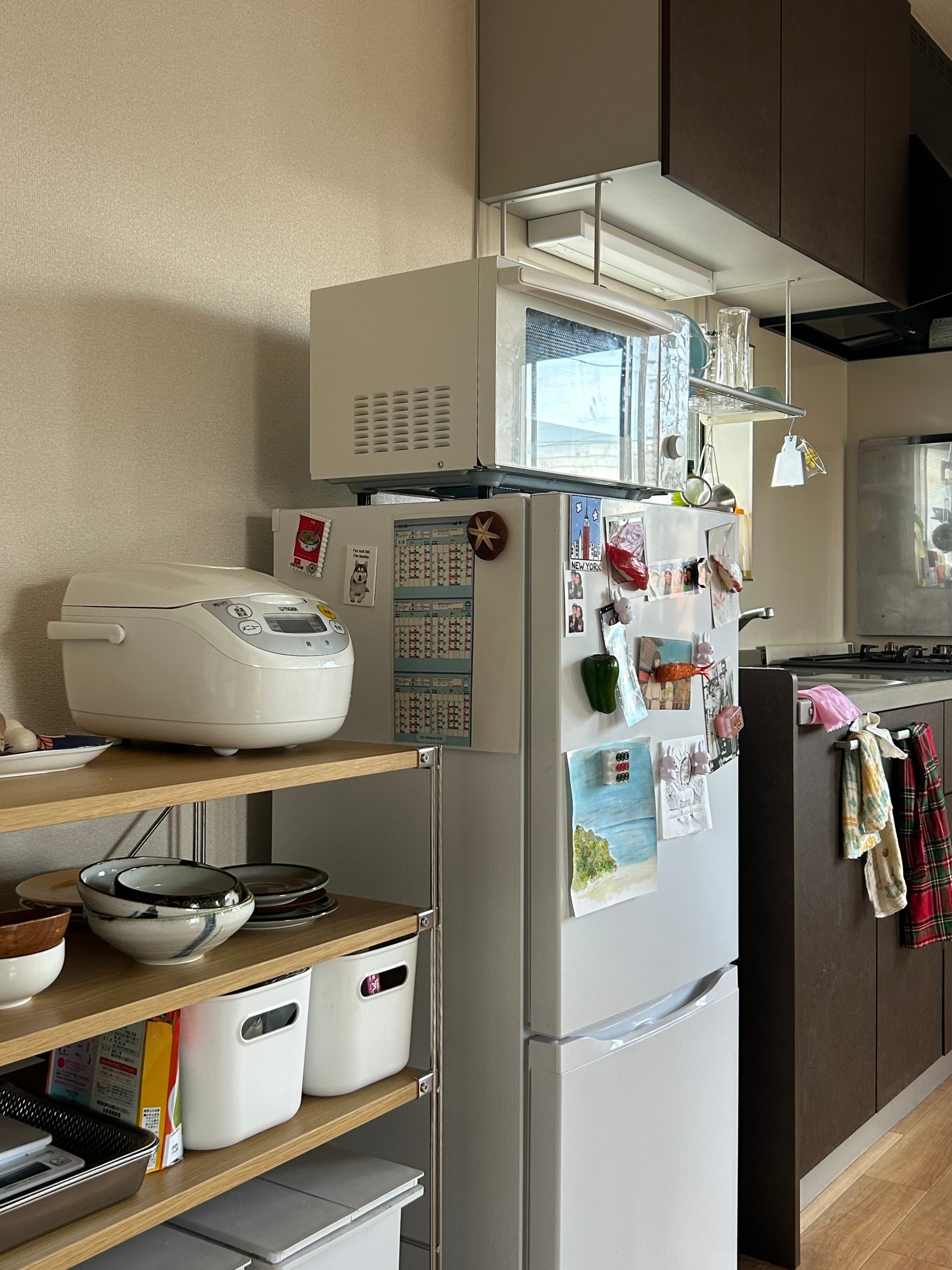
While he was at work, the shelf arrived and I built it from Japanese instructions that I could more or less understand from pictures. Now, the rice cooker is on a shelf, the pans are no longer stacked on the floor, and nothing is a performance, it’s just support. The old shelf of my past life has been emptied. Furniture is only furniture again and love is love. So, maybe that’s the relief, filling a space not to fix myself, but simply to live in it.


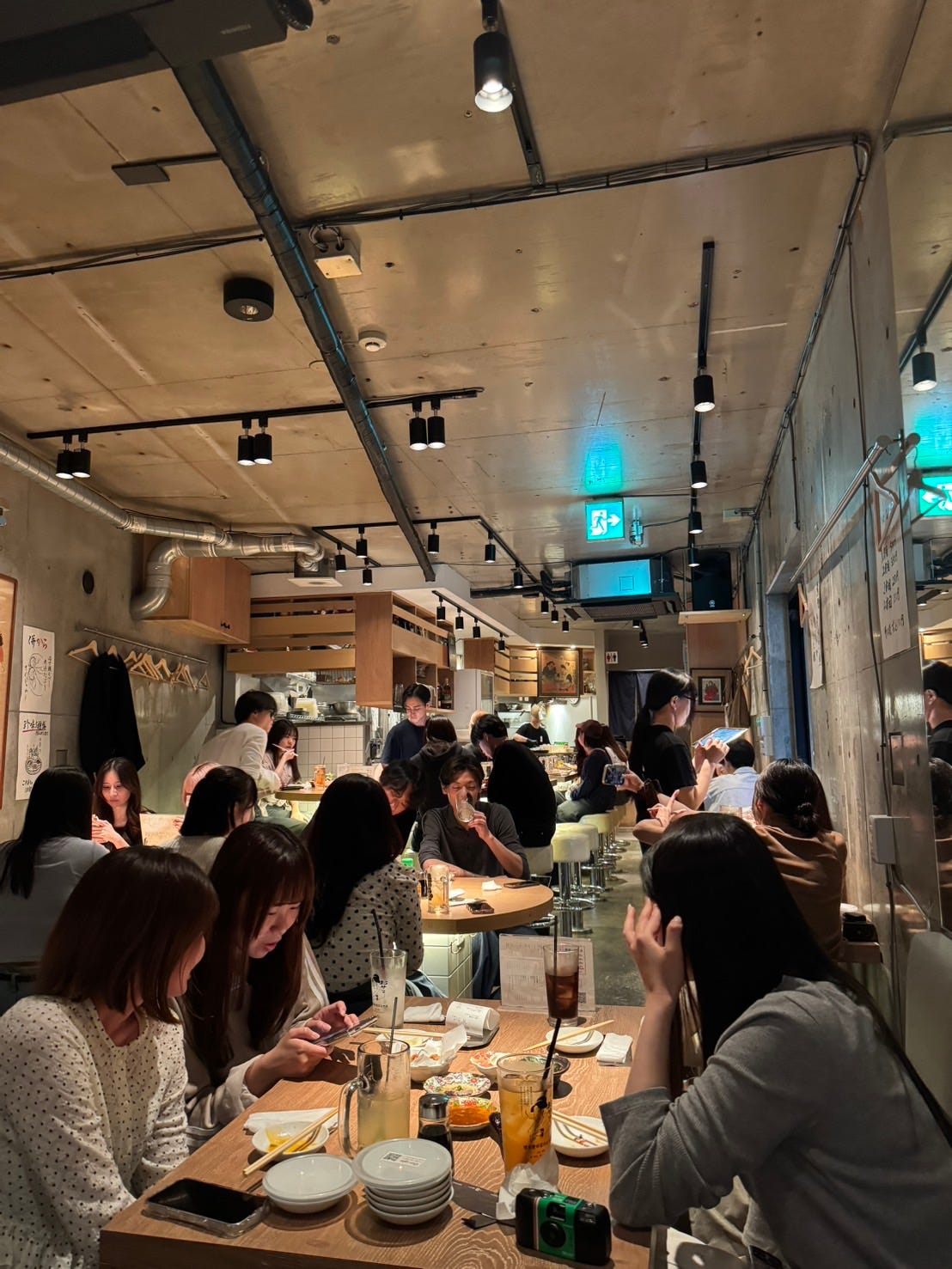
We went for a girl’s night to an izakaya called Heidon in Nakameguro. Contrary to the history of izakayas, where most patrons were salary men looking to smoke, drink and have some snacks after work, I think izakayas are the perfect place for the modern woman to talk shit with her best friends. What better place to accomodate gossip than a restaurant where the dishes are light, the drinks are cheap and there are ash trays already on your table in anticipation of your drunk cigarette. Note: Heidon is non- smoking, so you will have to have your slutty drunk ciggy outside. The food however felt a little more fun compared to your typical izakaya—prawn crackers, for example, should really be on every menu to pair with alcohol, they had smokey eihire (stingray) fin dipped in mayo, a classic potato salad where you could DIY the wasabi furikake, and everyone’s favourite gorgeous fried things like tako and chicken karaage (which we ordered both of). Heidon also has drinking system in which the 4th drink you order is the cheapest (and I mean cheaper than one can at a konbini, 150 yen!). What screams womanhood more than getting drunk while mainting the illusion of finacial responsibility? We are adults now, after all. Four drinks also meant I could try four of their countless sours on their menu like: Salty Lychee Sour, Pineapple Sour, Aloe Vera Sour and Cherry Sour. Either way, if you’re a woman with two weeks worth of gossip to unload, you should probably have a sour in hand and keep the tab going.
On a slightly more wholesome note, Kinuta Park is one of my favourites in Tokyo. In March, however, according to one of the dozen signs posted up in the park, a tree branch fell on someone, so the park has cordoned off certain seemingly high-risk areas with yellow caution tape. This makes the entire park look like a picturesque crime scene. Still, it’s a lovely place to picnic or go for a run so long as you ignore the oxymoron.
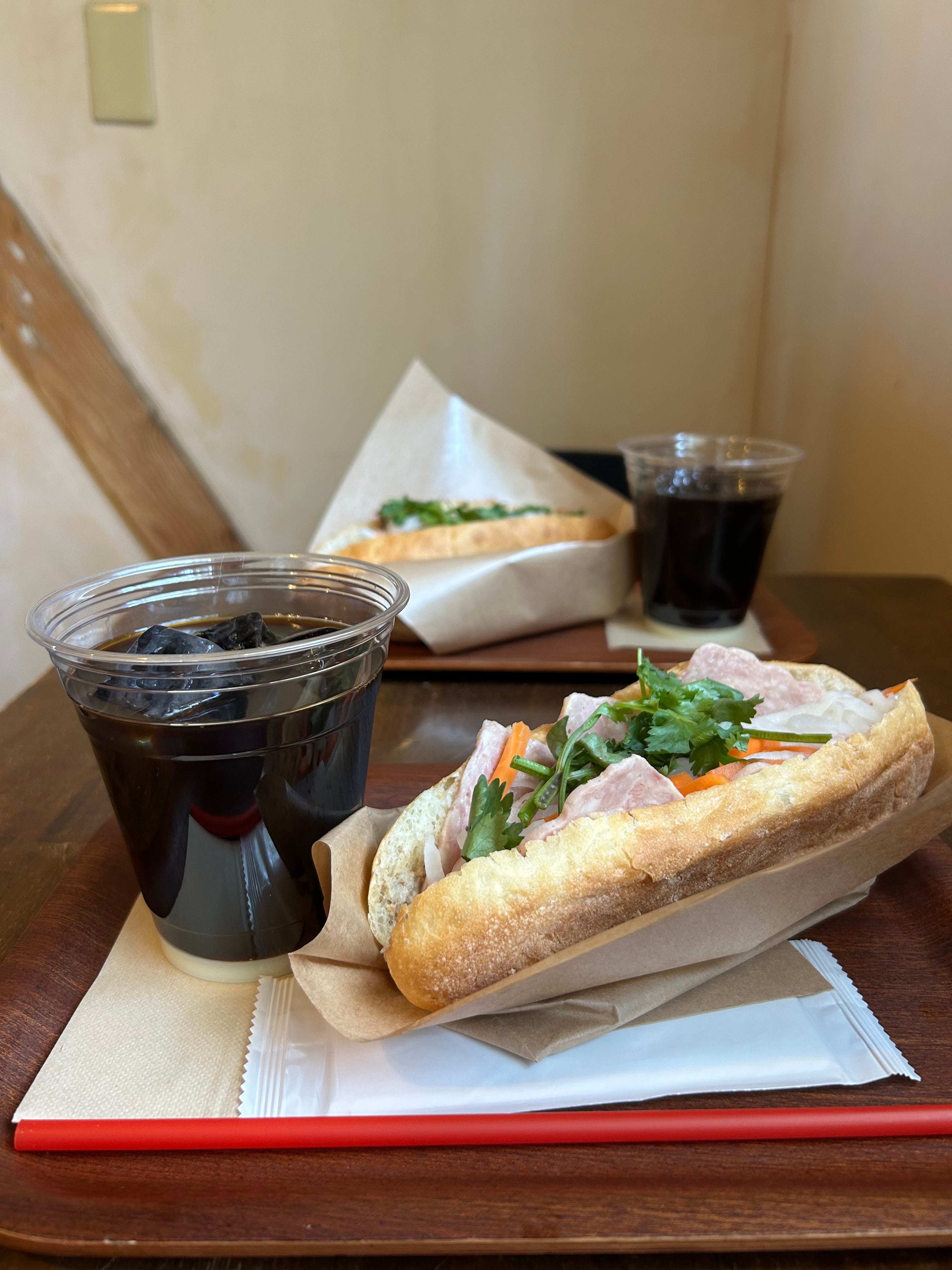
A short bike ride from the park is a bánh mì restaurant called ăn di. While it’s not the most authentic bánh mì you can find, with adjusted expectations, they do a very good ham and pâté sandwich in airy, crusty bread with lots of fresh pickled daikon, carrots and cilantro.
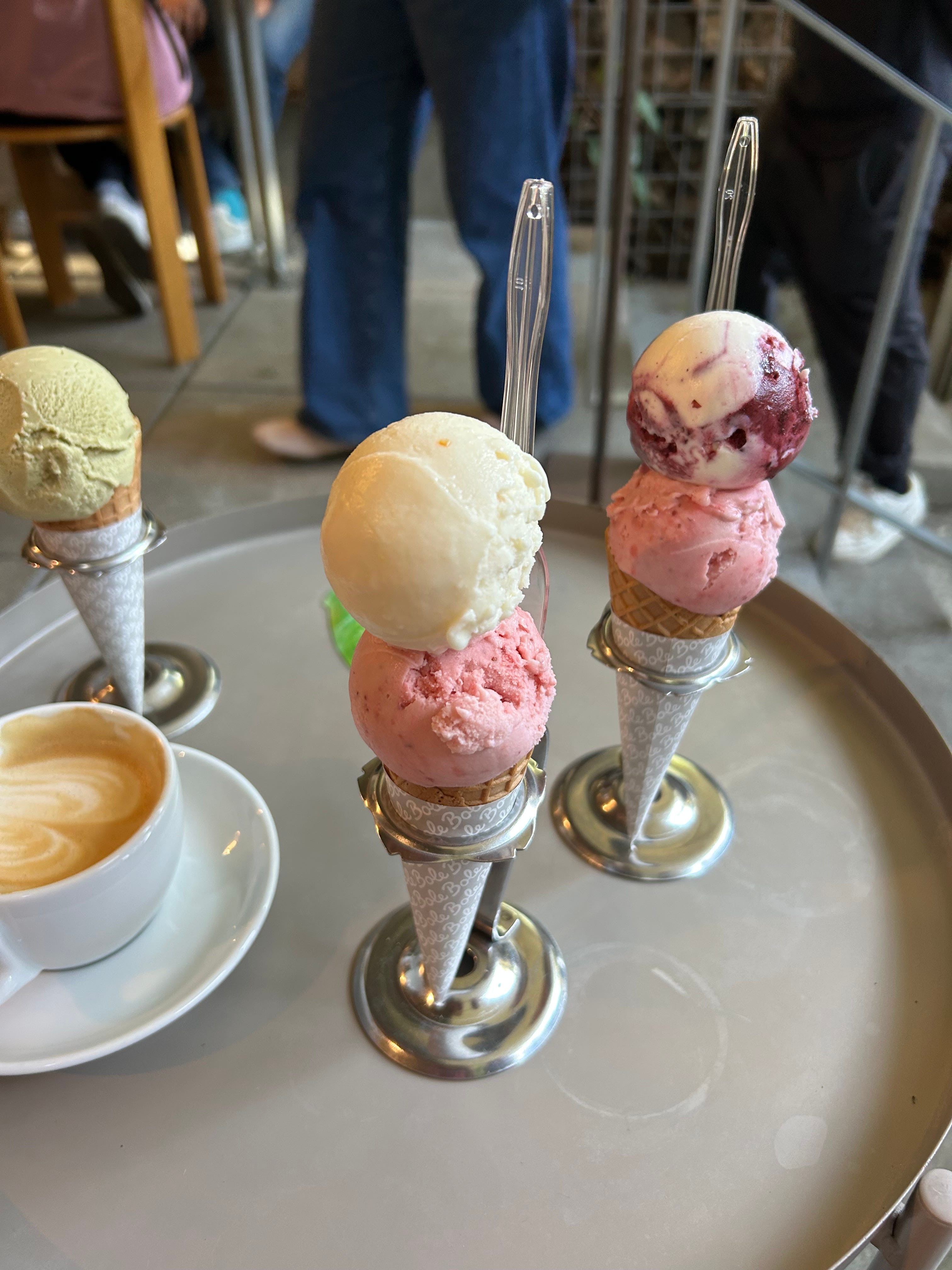
Close to Hanegi Koen is Bole COFFEE & ICE CREAM. This cafe is on a quiet street that feels like Kyoto where the sunlight scattered through the tree leaves (木漏れ日), makes you stop in the middle of the road to look up at the sky. Their ice cream is a little more on the expensive side, but I’d say it’s worth it when there’s nowhere else in Tokyo doing seasonal flavours like blueberry yogurt with lavender or lemon cream cheese!
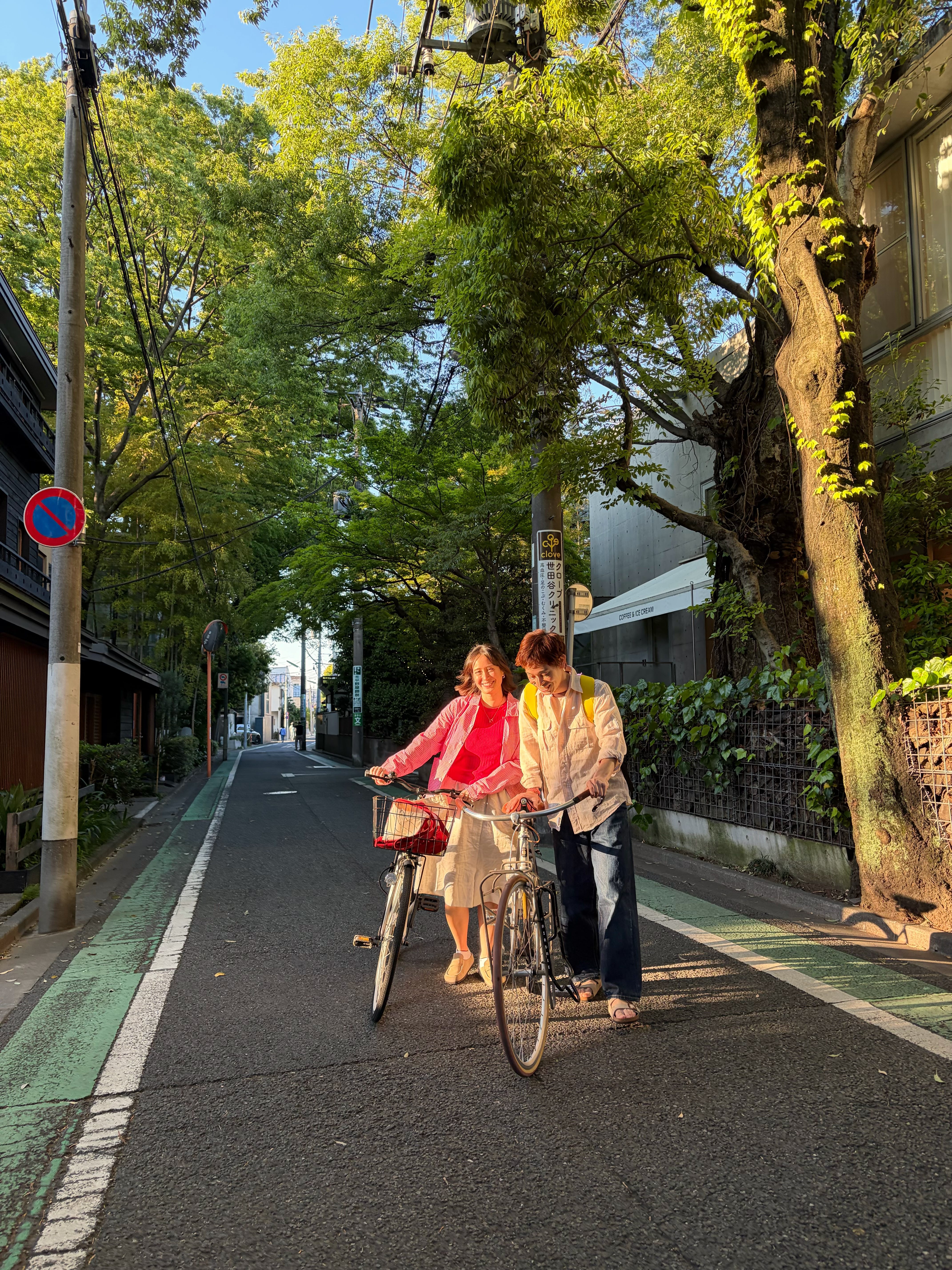
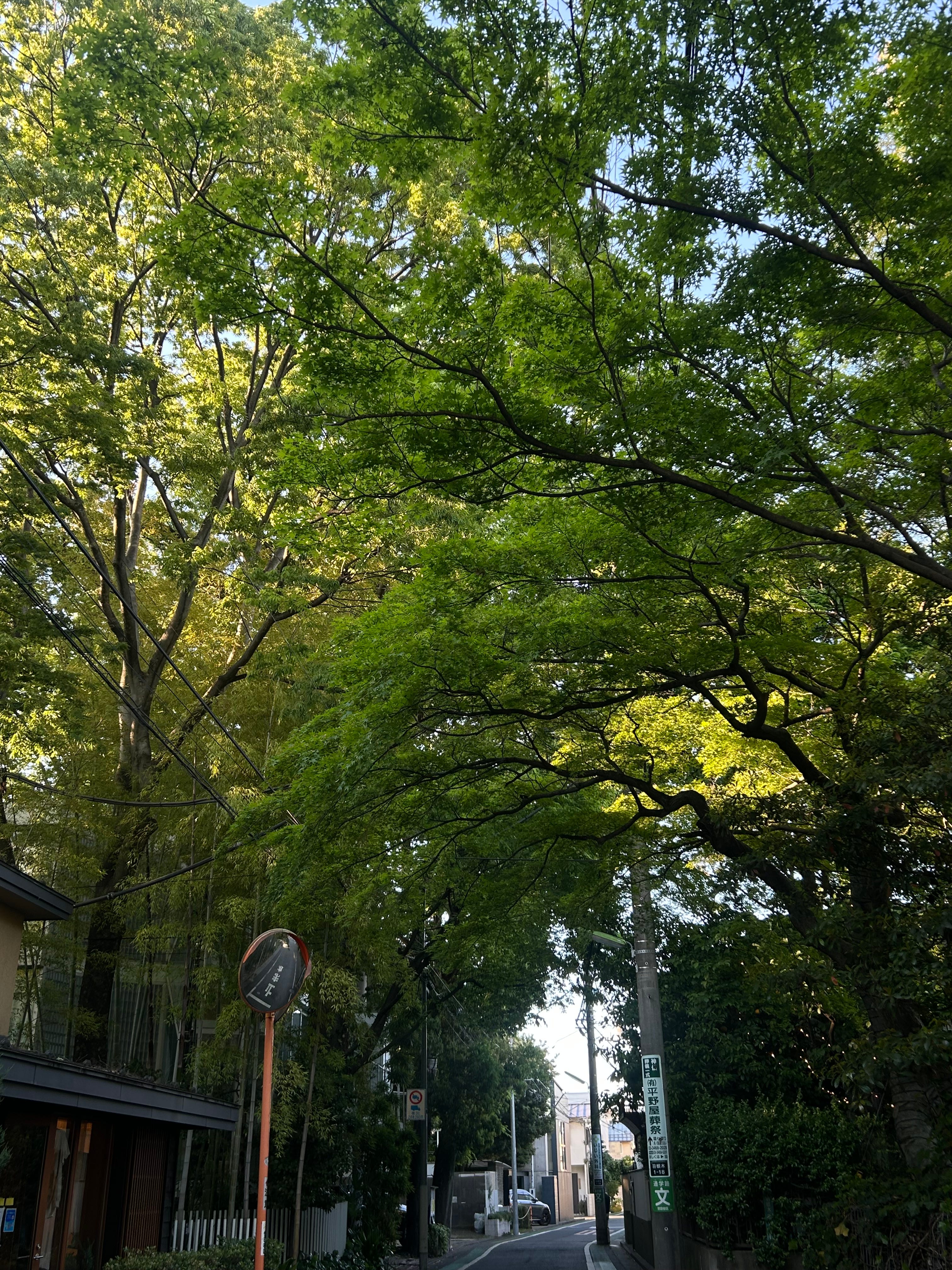
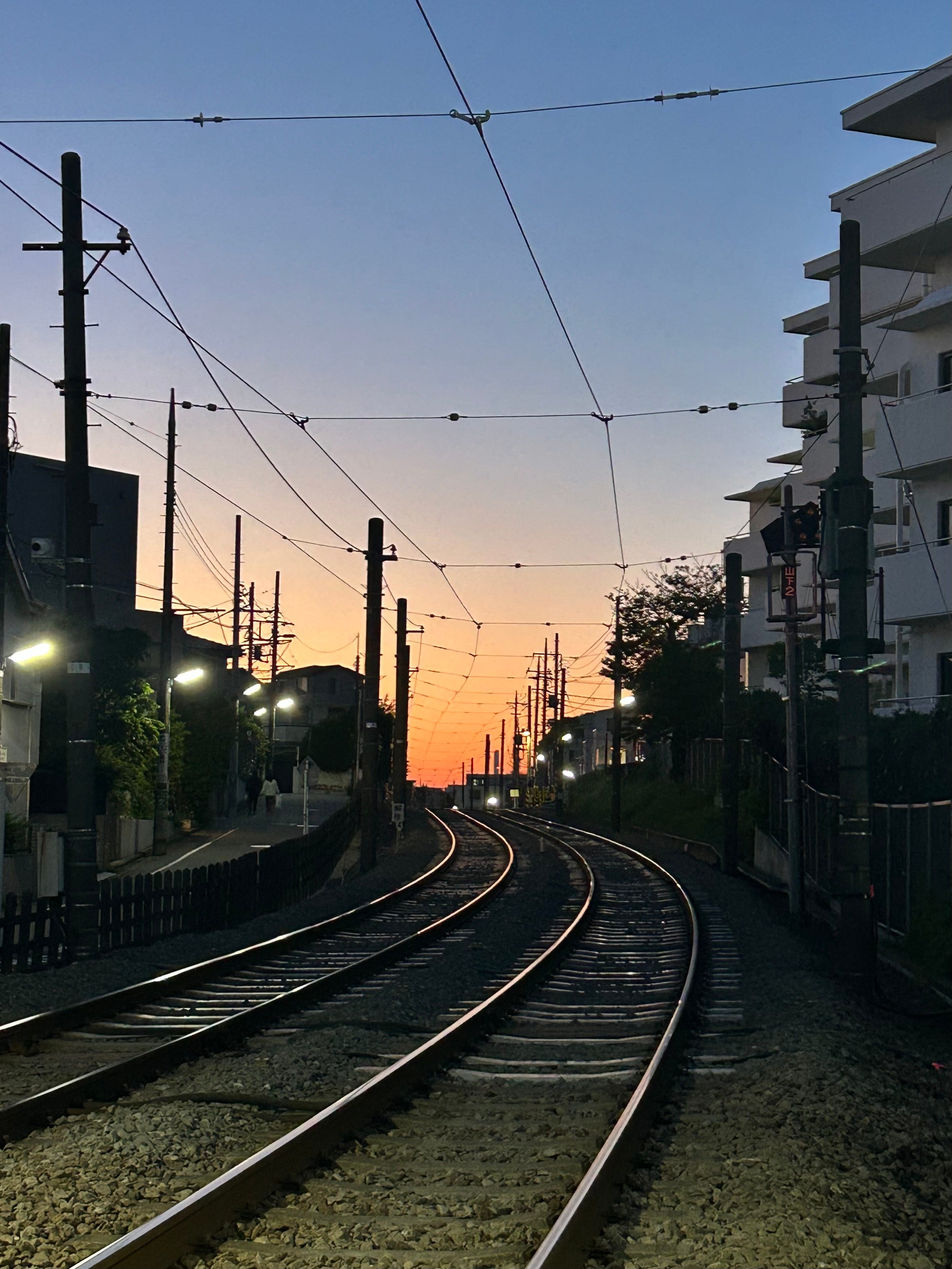
Finally, after lots of eating, quiet moments and reflection, the sun set on the train tracks and a new month began.
Talk soon,
Alexa